

Smell gas in your home or business? Knowing exactly what to do in the first few minutes can prevent a dangerous situation from escalating. This guide walks you through the immediate steps to take and clarifies who’s responsible for what when a gas leak occurs.
Quick Action Steps
If you suspect a gas leak:
- Strong smell or feeling unwell? Leave immediately and call 000
- Mild smell? Don’t use switches, phones, or appliances—exit first, then call
- Turn off the gas at the meter if you can do so safely on your way out
- Stay outside until a professional confirms it’s safe to return
Why Gas Leaks Require Immediate Action
Natural gas and LPG are safe when contained properly, but dangerous when they escape. Gas can accumulate quickly in enclosed spaces, creating two serious risks which are ignition from any spark or flame, and health effects from breathing it in. The distinctive smell added to gas exists specifically to alert you to leaks early.
Small leaks can be deceptive. What starts as a faint odour near an appliance can build up over hours, especially in poorly ventilated areas. Some people notice a hissing sound near pipes or connections before they detect the smell. Either sign warrants your full attention.
What to Do When You Detect Gas
If the smell is strong, spreading quickly, or making anyone feel unwell: Leave the property immediately and call emergency services on 000 from a safe distance. Don’t stop to investigate or gather belongings.
If the smell is mild and you’re confident you can exit safely:
- Avoid creating any sparks so don’t flip light switches, use phones, or operate appliances
- Open windows and doors as you move toward the exit to increase ventilation
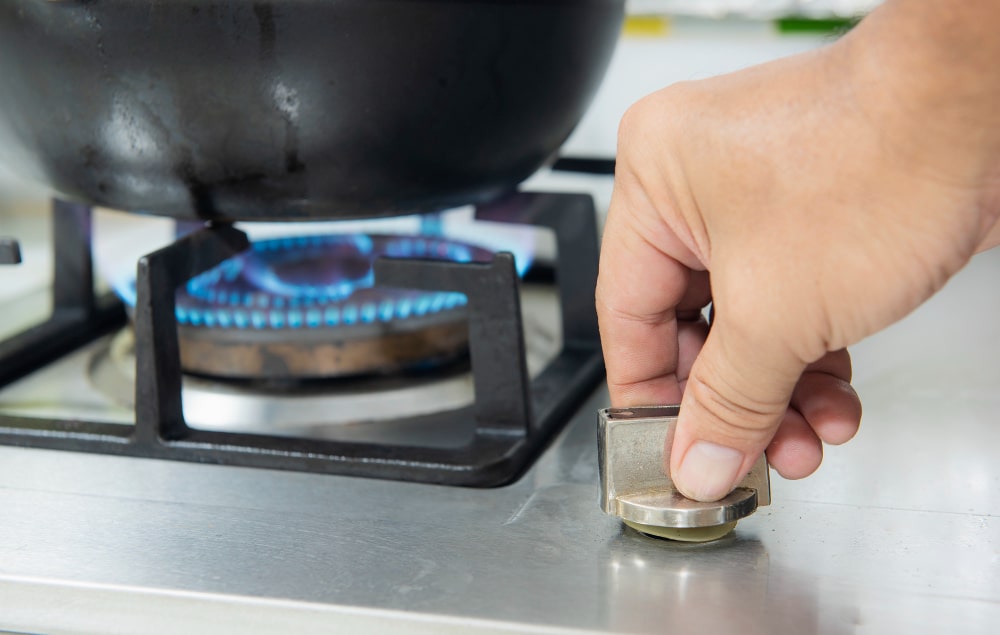
- Check that gas appliances are turned off (a pilot light can sometimes be the culprit)
- Exit the property and make your calls from outside
Never stay inside trying to locate the source. Even with windows open, gas can still be present at dangerous levels.
Turning Off Your Gas Supply
Most residential and commercial properties have a gas meter accessible from outside, typically mounted on an external wall near the electricity meter. The shutoff valve sits on the inlet pipe leading into the meter.
To turn off the gas supply, rotate the valve a quarter turn so it sits perpendicular (at a right angle) to the pipe. This stops gas from flowing into your property. Only do this if you can reach it safely without re-entering the building.
Once the gas is off, stay outside and wait for professional help. Even if the smell dissipates, don’t turn the gas back on yourself. A licensed gas plumber needs to check the system, identify the leak, and confirm everything is safe before restoring service.
Who to Call for Different Types of Gas Leaks
The right contact depends on where the leak is located.
- Leak from the street, footpath or external gas main: Contact your gas distributor immediately. Their 24-hour emergency number appears on your gas bill. They’re responsible for infrastructure up to and including your meter.
- A leak inside your property (after the meter): This falls under your responsibility. Once you’re safe and have evacuated, call a licensed gas plumber to locate and repair the issue. We provide 24 hour emergency gas services and can respond quickly to assess and fix leaks in homes and businesses across Brisbane.
- Any immediate danger or uncertainty: Call 000. Emergency services will assess the situation and coordinate the appropriate response.
- For apartment buildings or strata properties, notify your building manager or body corporate as well. Leaks can affect multiple units, and they’ll need to alert other residents.
Preventing Gas Leaks Through Regular Maintenance
Gas appliances and fittings naturally degrade over time. Connections can loosen, seals can perish and components can corrode so regular inspections catch these issues before they become urgent problems.
A licensed gas plumber should inspect your gas system:
- After installing any new gas appliance
- When renovating or modifying gas lines
- Every 2-3 years as part of routine maintenance
- If you notice changes in appliance performance or unusual smells
Never attempt DIY gas work. All gas fitting must be carried out by licensed professionals. Unauthorised installations or repairs create serious safety risks and may void your insurance.
Warning signs to watch for between inspections include unusual odours near appliances, yellow or orange flames instead of blue, appliances that frequently cut out, or visible corrosion on gas lines and fittings.
Get Professional Help When You Need It
Gas leaks require immediate professional attention, so whether you’ve detected a leak or want to schedule preventative maintenance, working with qualified tradespeople protects your property and everyone in it.
Need emergency gas services? DW. Grout Plumbing provides 24/7 emergency response for gas leaks, along with routine gas fitting, appliance installation, and safety inspections throughout Brisbane.
Call us now on (07) 3266 8911 for immediate assistance, or contact us to schedule a gas safety inspection. Be sure to save our number in your phone before you need it, because when a gas leak happens, every minute counts.


